
The Seat You Need Is Already Taken — Here’s How AI Fixes That
An AI library seat booker is a smart system that uses technologies like computer vision, real-time sensors, and predictive analytics to help students find, reserve, and check into library seats automatically — without manual searching or front-desk queues.
Quick answer — best AI library seat booking options to evaluate:
- Library7x — full SaaS platform with real-time seat booking, attendance tracking, and analytics (40% space utilization increase reported)
- Librfy — mobile-friendly app with QR code check-ins, multi-shift management, and AI-powered analytics
- Lunacal.ai — flexible booking system with automated reminders, multi-resource support, and embeddable calendars
- LibSeatTrackerAI — open-source project using object detection (YOLO) to automate seat monitoring
- SimplyBook.me — multi-channel scheduling tool adaptable for library resource management
You know the feeling. It’s finals week. You drag yourself to the library, laptop in hand, only to find every seat taken — or worse, seemingly taken by an unattended bag with no person in sight.
This is one of the most frustrating friction points in student life. And it’s surprisingly common.
The good news? Libraries are starting to solve this with AI. Systems that detect real-time occupancy, let you book a seat from your phone, and even flag “ghost” seats where someone left their stuff but never came back.
Some libraries using these tools have seen no-shows drop by 70% and space utilization climb by 40% — numbers that translate directly into you actually getting a seat when you need one.
This guide evaluates the top AI library seat booking solutions so you can understand what’s out there, what actually works, and what to look for.
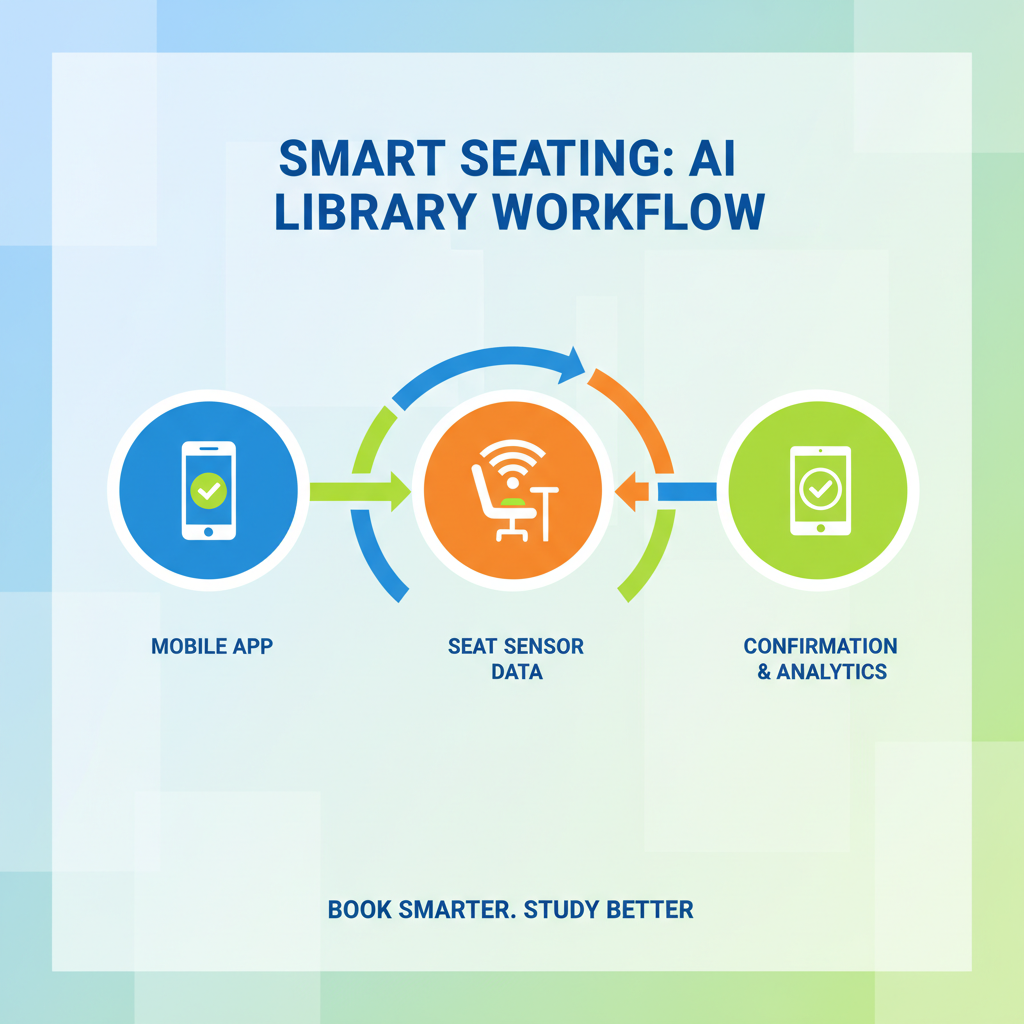
What is an AI Library Seat Booker and Why Do You Need One?
For decades, library management relied on the “first-come, first-served” chaos or clunky online forms that didn’t talk to the actual chairs in the room. An ai library seat booker changes the game by bridging the gap between digital reservations and physical reality.
Traditional vs. AI Booking Systems
Traditional systems are basically digital clipboards. You pick a time, hope the person before you leaves, and if they don’t, you’re stuck wandering the aisles. AI-powered systems, like Library7x – Smart Library Management System, use real-time data to ensure that if a seat is marked “available” on your screen, it is actually empty in the library.
We’ve found that the biggest difference lies in predictive analytics. While a standard system just shows who should be there, an AI system can predict peak hours and suggest alternative times when the library will be quieter. This is one of those time-saving AI tools for students that reduces the mental load of planning a study session.
Solving the “Seat Hogging” Problem
We all know the student who leaves a scarf on a chair at 8:00 AM and doesn’t return until noon. AI systems tackle this through real-time vacancy detection. If a sensor or camera sees a seat has been “occupied” by a bag but no human for 30 minutes, the system can automatically release the booking.
Modern Resource Management
Beyond just chairs, these systems manage the library’s “shifts.” Some platforms allow administrators to set morning, evening, or night shifts to ensure fair access. This level of automation helps libraries reduce administrative overhead by up to 60%, allowing staff to focus on helping students rather than policing desk usage.
Core Technologies Powering the Modern AI Library Seat Booker
The “AI” in these systems isn’t just a buzzword; it’s a combination of several high-tech layers working together to make your life easier.
Computer Vision and Object Detection
The heavy lifting is often done by YOLOv8 (You Only Look Once), a state-of-the-art object detection model. Projects like the SeatLocator GitHub Repository use this technology to scan library floors.
Unlike a basic motion sensor, computer vision can distinguish between:
- A student actively studying.
- A chair pushed in and empty.
- A “ghost seat” (a chair with a backpack or laptop but no person).
By using k-means clustering to optimize how the AI “sees” the room, these systems can maintain high accuracy even in weird lighting or crowded corners.
LLM Decision Engines
While we usually think of Large Language Models (LLMs) as chatbots, they are increasingly used as background decision engines. In a smart office booking AI setup, an LLM might process complex requests. Instead of just clicking a box, the system understands context: “I need a quiet spot near a window for three hours.” The AI analyzes your preferences, historical habits, and real-time availability to suggest the perfect spot.
The Hardware Stack
Most of these systems aren’t just software; they require a physical presence. This often includes:
- Raspberry Pi units: Small, cost-effective computers that process camera feeds or sensor data.
- Occupancy Sensors: Infrared or pressure sensors that detect physical presence.
- Flask Backends: A lightweight web framework often used to connect the AI’s “brain” to the user’s mobile app.
Key Benefits of Implementing an AI Library Seat Booker
If you’re a student, the benefit is simple: less stress. If you’re a library administrator, the benefits are quantifiable and massive.

Efficiency for Students
Using productivity apps for students using AI is all about reclaiming your time. With an AI booker, you don’t waste 20 minutes circling the third floor. You book on the bus, walk in, scan a QR code, and start working.
Massive Gains for Libraries
The data from existing implementations is staggering. Libraries using smart systems have reported:
- 40% increase in space utilization: More students are able to use the same amount of square footage because the “dead time” between bookings is eliminated.
- 70% reduction in no-shows: Automated SMS and email reminders keep students accountable.
- 15-20 hours saved weekly: Administrators no longer have to manually track check-ins or manage disputes over “saved” seats.
Personalized Recommendations
Advanced platforms like The most powerful Library Booking system can learn your habits. If you always book a seat near the computer lab on Tuesdays, the AI can proactively suggest that spot for you next week. It’s like having a personal concierge for your academic life.
Top Features to Look for in an AI Library Seat Booker
Not all booking systems are created equal. If your university is looking to upgrade, or if you’re evaluating a tool for your own study space, here is what we recommend looking for:
| Feature | Manual/Traditional Systems | AI-Powered Systems |
|---|---|---|
| Availability | Static/Estimated | Real-time / Sensor-verified |
| Check-in | Manual log or none | QR Code / Auto-detection |
| No-show Handling | Manual deletion | Automatic release after X mins |
| Analytics | Basic headcounts | Predictive heatmaps & trends |
| Personalization | None | Suggests seats based on history |
Mobile-First Design
Students live on their phones. A system that doesn’t have a snappy mobile interface is dead on arrival. We look for apps that offer instant confirmations and easy rescheduling. This is a core part of setting up AI tools for academic productivity.
Multi-Branch Support and Scalability
For large universities, the system needs to handle dozens of locations. The LibSeatTrackerAI Project demonstrates how a unified backend can manage different floors and buildings from a single admin dashboard.
Security and Compliance
Data privacy is non-negotiable. Look for systems that are SOC 2 compliant or follow GDPR standards. The system should track occupancy, not identity via video. The best AI systems process the “person” detection locally on the device (like a Raspberry Pi) and only send the “occupied/vacant” status to the cloud, ensuring your face isn’t being stored on a server.
Frequently Asked Questions about AI Library Seat Bookers
Can an AI library seat booker manage study rooms and equipment?
Absolutely. While we call them “seat bookers,” these systems are actually resource allocators. Most top-tier solutions can easily scale to manage:
- Group study rooms (with rules about minimum occupancy).
- Computer labs and specialized hardware.
- Makerspaces and 3D printers.
- Lending equipment like tablets or calculators.
By streamlining study schedules with AI automation, libraries can ensure that high-demand resources are shared fairly and aren’t sitting idle.
How does an AI library seat booker handle “ghost” seats with personal items?
This is the “killer feature” of AI. Traditional sensors might think a seat is empty if you’re sitting very still, or full if you leave a heavy book on it.
An AI Smart Library Seat Vacancy System uses computer vision to identify the difference between a human and a backpack. The logic usually works like this:
- Person leaves: The AI starts a “temporary departure” timer (e.g., 15 minutes for a coffee break).
- Items remain: The AI recognizes the seat isn’t truly “vacant” but is in a “holding” state.
- Timer expires: If the person doesn’t return, the system sends a notification: “We noticed you’ve been away. Your seat will be released in 5 minutes unless you check back in.”
This ensures fair usage without being overly aggressive if you just need a quick stretch.
Is student data safe in an AI library seat booker?
We understand the concern — cameras in a library can feel a bit “Big Brother.” However, modern AI library seat bookers are designed with privacy-first protocols.
Most systems use edge computing, meaning the video feed is processed instantly into “1” (occupied) or “0” (vacant) and the actual footage is never saved or uploaded. Furthermore, integration with university single sign-on (SSO) ensures that your personal data is protected by the same encryption that guards your grades. Using AI tools to reduce study time shouldn’t mean sacrificing your privacy.
Conclusion
At Vida em Jardim, we believe that your environment is the foundation of your academic success. An ai library seat booker isn’t just a fancy piece of software; it’s a tool that removes the “search cost” of studying. By automating the boring stuff — like finding a chair or checking if a room is free — you can dedicate more brainpower to your actual work.
As libraries continue to evolve into high-tech hubs, these systems will become the standard. If you’re looking to level up your study game, we recommend checking if your library offers these tools or even suggesting them to your student union. Combine a guaranteed seat with our smart planning tips for exam prep, and you’ll be unstoppable.
Want to stay ahead of the curve? Explore more study hacks for college students and discover how AI is reshaping every part of campus life.
