
The Real Effects of Procrastination on Students (And Why They Matter)
The effects of procrastination on students go far deeper than a missed deadline or a last-minute cram session. Here is a quick overview of what the research shows:
- Lower grades – Procrastination is negatively correlated with GPA and exam performance
- Increased stress and anxiety – Stress levels rise sharply as deadlines approach
- Depression and low self-esteem – Repeated delays fuel guilt, shame, and self-doubt
- Poor sleep quality – Procrastinators consistently report worse sleep
- Physical health problems – Higher rates of illness, pain, and physical inactivity
- Reduced academic satisfaction – Less engagement, shallower learning, and more regret
- Loneliness and social strain – Chronic procrastination is linked to isolation and economic hardship
Here is something that might surprise you: procrastination is not a modern problem invented by TikTok or YouTube.
The ancient Greek poet Hesiod warned against it as far back as 700 BC. The Romans wrote about it too. Even the word itself carries weight — it comes from the Latin procrastinare, meaning “deferred until tomorrow,” and the Greek akrasia, which means “acting against your own better judgment.”
In other words, humans have always known they were doing it. And they kept doing it anyway.
That is what makes procrastination so frustrating — and so worth understanding. It is not a character flaw or a time management failure. Research consistently shows it is driven by emotional avoidance and self-regulation breakdown. Students delay not because they are lazy, but because the task triggers discomfort, and avoiding it feels better in the moment.
For college students juggling coursework, jobs, social lives, and mounting pressure to perform, that emotional pull can be incredibly powerful — and the consequences, as the research shows, are very real.
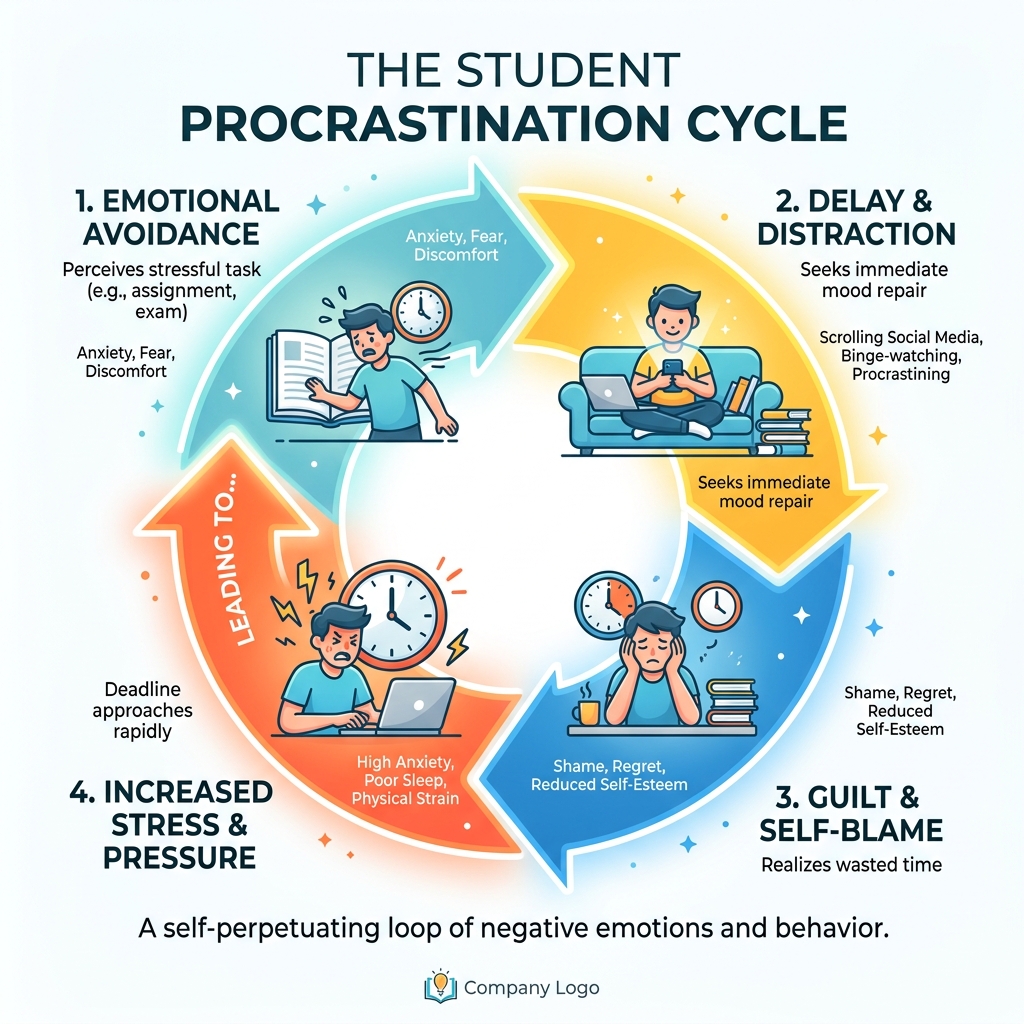
The Psychological Roots: Why Students Procrastinate
To understand the effects of procrastination on students, we first have to look at what is happening inside the brain. Many people assume that procrastinators are just “bad with time.” However, experts now agree that procrastination is actually a failure of emotional management.
When we look at a difficult assignment, our brain’s amygdala (the part responsible for our “fight or flight” response) can perceive that task as a threat. We feel anxious, bored, or overwhelmed. To protect us from those negative feelings, our brain directs us toward something that provides immediate “mood repair”—like scrolling through social media or cleaning the kitchen.
This is often called self-regulation failure. We know we should work, but we lack the immediate emotional strength to handle the discomfort of the task. Another key factor is temporal discounting. This is a fancy way of saying that we tend to value small, immediate rewards (like the fun of watching a video now) over larger, future rewards (like getting an A on a paper three weeks from now).
For many of us, perfectionism also plays a role. We might tell ourselves, “If I can’t do this perfectly, I shouldn’t do it at all.” This fear of failure leads to “self-handicapping,” where we delay work so that if we fail, we can blame it on the lack of time rather than a lack of ability.
A Scientific research on the relationship between procrastination and academic performance highlights that this isn’t just a minor habit; it is a deeply ingrained behavioral pattern that affects how we process rewards and manage our internal state. When our “cool” cognitive resources are overridden by “hot” emotional impulses, we fall into the trap of habitual hesitation.
The Academic Effects of Procrastination on Students
The most visible effects of procrastination on students appear in the grade book. While some students claim they “work better under pressure,” the data tells a different story. In a famous 1997 study, researchers found that while procrastinators felt less stress early in the semester, they ended up with significantly lower grades and much higher stress levels by the end.
This leads to what is known as Student Syndrome. This happens when a student plans to procrastinate, believing they only need a few hours to finish a task. When the deadline arrives, they realize the task is much harder than expected, leading to rushed, low-quality work.
| Feature | High-Procrastination Students | Low-Procrastination Students |
|---|---|---|
| Average GPA | Generally lower; frequent “emergency” cramming | Higher; consistent study habits |
| Learning Style | Surface learning (memorizing for the test) | Deep learning (understanding concepts) |
| Stress Levels | Low at start, extreme at deadlines | Moderate and consistent throughout |
| Assignment Quality | Often rushed, incomplete, or unpolished | Thorough, reviewed, and high-quality |
| Academic Satisfaction | Low; often feel regret and frustration | High; feel a sense of accomplishment |
Beyond just grades, procrastination impacts conceptual clarity. When we cram at the last minute, we are using our short-term memory. We might pass the test, but the information “vanishes” shortly after. This makes future classes harder because we haven’t built a strong foundation.
According to Research on academic achievement in postgraduate students, even advanced students struggle with this. The study found a significant negative correlation between procrastination and achievement, proving that no matter how smart you are, waiting until the last second will eventually catch up with you.
Beyond the Classroom: The Mental and Physical Health Toll
If procrastination only affected our grades, it would be bad enough. But the effects of procrastination on students extend into our very bodies and minds. Chronic delay creates a “procrastination-health model” where the stress of putting things off leads to actual physical and mental illness.
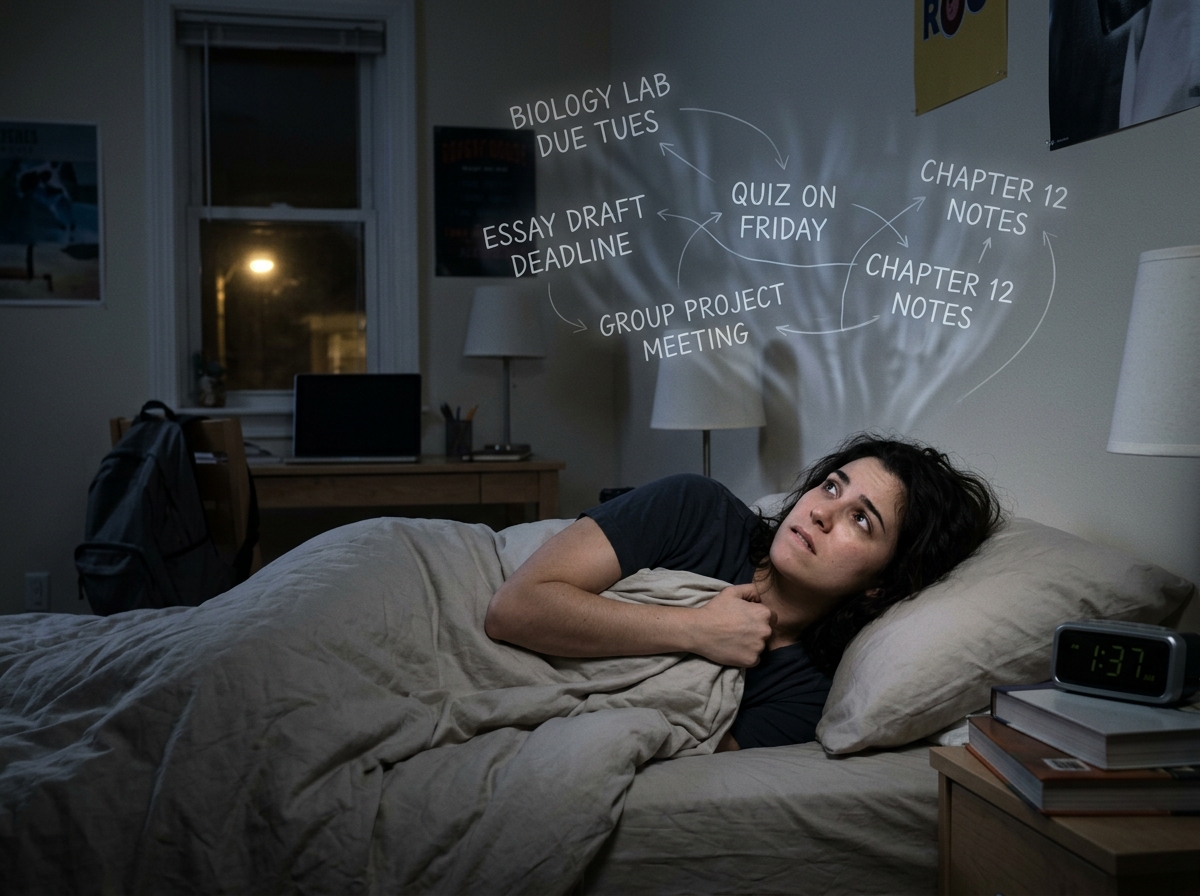
When we delay, we aren’t actually relaxing. We are carrying the “mental load” of the unfinished task with us everywhere we go. This keeps our cortisol levels (the stress hormone) elevated for much longer than they should be. Over time, this constant state of “alert” wears down our immune system.
One of the most significant areas affected is sleep. A study on Investigating the link between trait procrastination and sleep quality found that students who procrastinate during the day often engage in “revenge bedtime procrastination” at night. Because they didn’t get their work done, they feel they “owe” themselves some leisure time, so they stay up late scrolling through videos, which ruins their sleep quality and executive function the next day.
Mental Health Effects of Procrastination on Students
The mental health toll is often a vicious cycle. We procrastinate because we feel anxious; then, because we procrastinated, we feel even more anxious. This cycle can lead to:
- Anxiety and Depression: Constant worry about deadlines can trigger or worsen clinical symptoms.
- Low Self-Esteem: We start to view ourselves as “lazy” or “failures,” which erodes our confidence.
- The Guilt Cycle: Every hour spent avoiding work is filled with a nagging sense of guilt, preventing us from ever truly enjoying our downtime.
- Loneliness: Chronic procrastinators may isolate themselves to hide their lack of progress or because they feel they “don’t deserve” to go out with friends.
Physical Health Effects of Procrastination on Students
Recent longitudinal research, including a large study of over 3,500 Swedish university students, has linked procrastination to several physical issues:
- Upper Extremity Pain: Interestingly, procrastinators report more pain in their neck, shoulders, and arms, likely due to the physical tension of stress and poor posture during “panic” study sessions.
- Cardiovascular Strain: Constant high stress is a known risk factor for heart health later in life.
- Reduced Physical Activity: When we are behind on work, exercise is usually the first thing we cut from our schedule.
- Illness Susceptibility: Procrastinators tend to get sick more often, especially during finals week when their immune systems are most compromised.
Breaking the Habit: Strategies for Academic Success
At Vida em Jardim, we believe that while procrastination is a tough enemy, it is one you can defeat. Since the effects of procrastination on students are so wide-ranging, our solutions need to be comprehensive too. Here are some of the best ways to reclaim your time:
- Practice Self-Compassion: This sounds counterintuitive, but forgiving yourself for procrastinating in the past actually makes you less likely to do it today. If you beat yourself up, you increase your stress, which makes you want to avoid the task even more.
- Positive Reframing: Instead of saying “I have to write this boring paper,” try saying “I want to share my ideas on this topic.” Changing the narrative helps lower the emotional threat of the task.
- Task Chunking: We often procrastinate because a task feels too big. Break a 10-page paper into “writing three sentences.” Once you start, the “Zeigarnik Effect” (the brain’s tendency to want to finish what it started) will help you keep going.
- The 2-Minute Rule: If a task takes less than two minutes (like emailing a professor or checking a due date), do it immediately. This prevents “ephemeral chores” from piling up.
- Leverage AI for Productivity: We can use modern tools to lower the barrier to entry. For example, check out these AI Techniques to Avoid Procrastination to see how technology can help you get started.
- Reward Systems: Train your brain to associate work with positive feelings. Tell yourself, “If I study for 25 minutes, I can listen to my favorite song.”
Using tools like Stay Focused: Study Hacks Using AI can also help you manage your environment and reduce digital distractions. If you are preparing for a big test, our Smart Planning Tips for Exam Prep can help you build a schedule that prevents the dreaded “Student Syndrome.”
Frequently Asked Questions about Student Procrastination
Is procrastination just a result of poor time management?
No. While time management skills are helpful, procrastination is primarily an emotional regulation issue. You can have the best planner in the world, but if you are afraid of failing at a task, you will still find reasons to avoid it. Addressing the underlying anxiety or boredom is the key to stopping the cycle.
What percentage of college students struggle with procrastination?
Research suggests that a staggering 80-95% of college students engage in procrastination to some degree. About 75% of students consider themselves “procrastinators,” and for nearly half of them, it is a chronic, problematic habit that interferes with their daily life and health.
Can technology help reduce the effects of procrastination on students?
Absolutely! While technology is often the source of distraction, it can also be the cure. AI tools can help by breaking down complex instructions, creating customized study schedules, and providing reminders. For instance, Streamlining Study Schedules with AI Automation can take the “decision fatigue” out of planning your day, making it much easier to simply sit down and start working.
Conclusion
The effects of procrastination on students are a serious matter, impacting everything from your GPA to your long-term physical health. It is a habit that has plagued humanity for thousands of years, but in the modern age, we have more tools than ever to fight back.
By understanding that procrastination is about managing your emotions—not just your clock—you can start to treat yourself with more kindness and less judgment. Breaking the cycle takes time, but every small step you take toward starting a task earlier is a win for your future self.
At Vida em Jardim, we are dedicated to helping you navigate these challenges with AI-powered strategies tailored for your academic and personal life. Whether you are struggling with a specific project or just want to improve your overall focus, we have the resources to help you succeed. For more practical advice, explore our More study hacks and productivity tips and start building the productive life you deserve.
