DIY Easter Wreath: A Simple Grapevine Base with Spring Stems
A foundation Easter wreath on a grapevine base: how to choose a base, plan an asymmetrical crescent, tuck and wire faux stems, add eggs, a bow and a hanging loop, and store it flat.
Tutorial at a glance
Materials
- 14 in (36 cm) grapevine wreath base
- Faux greenery and small blossom stems
- 3 to 5 lightweight craft eggs on picks
- Paddle floral wire and wire cutters
- About 1 yd (0.9 m) of ribbon
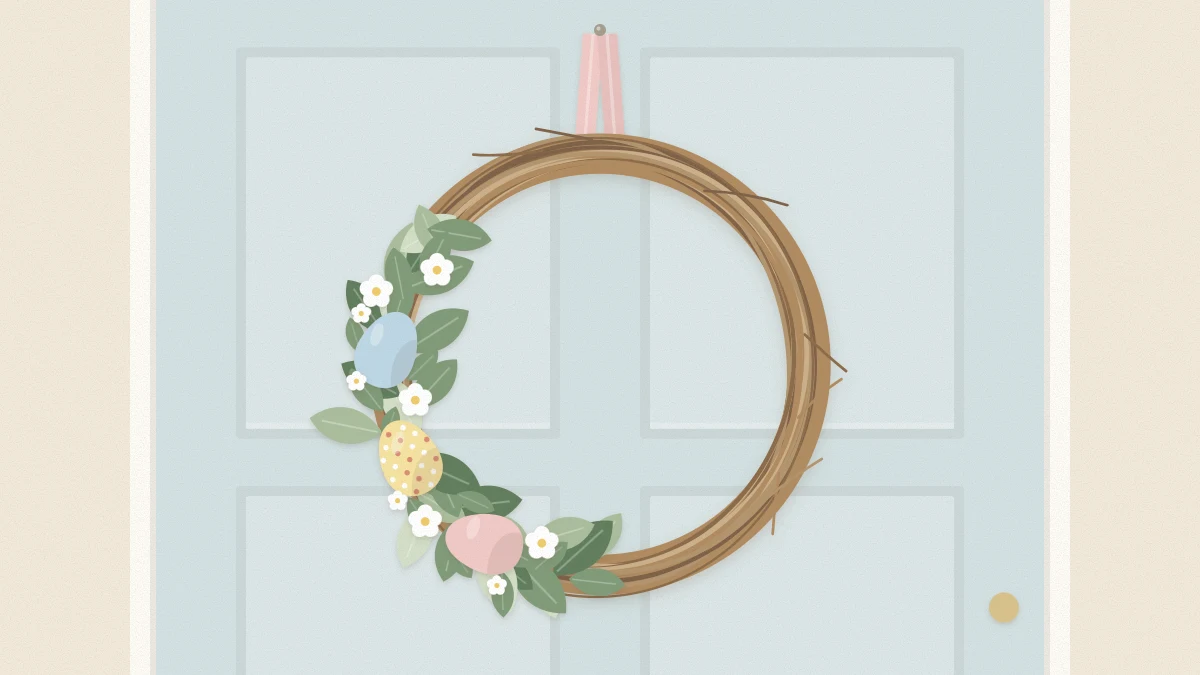
A DIY Easter wreath does not need to be covered from edge to edge. A plain grapevine ring with a crescent of spring stems on one side, a few eggs and a ribbon is quicker to make, lighter on the door and easier to restyle next year.
This is the foundation version: one base, a handful of faux stems, floral wire and about an hour. Once the method is familiar, the same steps work for any seasonal wreath.
Choosing a wreath base
The base sets the weight, the look and the way stems are attached. Four types are widely sold in craft stores.
| Base | How stems attach | Best for |
|---|---|---|
| Grapevine ring | Tucked between vines, then wired | Partial designs with the base showing |
| Flat wire frame | Wired on in overlapping bundles | Full greenery wreaths |
| Foam ring | Pinned or glued | Fully covered designs |
| Wooden hoop | Wired to a small section | Light, minimal wreaths |
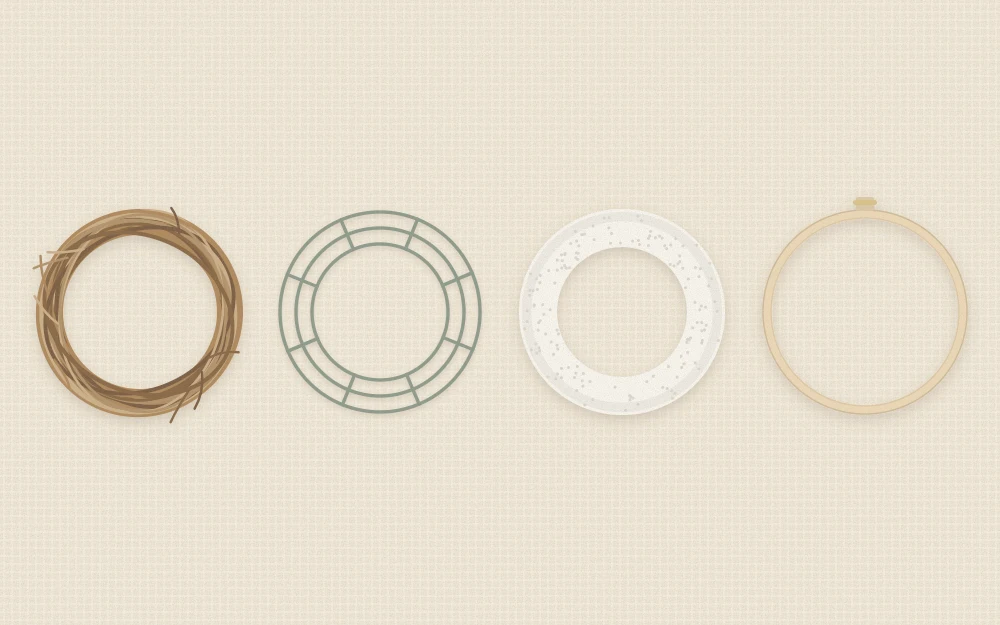
Grapevine is the most forgiving choice for a first wreath. The twisted vines grip stems before any wire goes on, and the bare section looks finished without extra work. A 14 in (36 cm) ring suits most front doors; go up to 18 in (46 cm) for a wide or double door.
If you prefer a ring fully covered in eggs, a foam form is the better base, and the Easter egg wreath tutorial covers that build. For the lightest option of all, see the embroidery hoop Easter wreath.
What you need
- One grapevine wreath, about 14 in (36 cm) across
- Three or four faux greenery stems, such as eucalyptus or fern
- Two or three stems of small faux blossoms in white or a soft color
- Three to five lightweight craft eggs, plastic or foam, on wire picks
- Paddle floral wire in green or brown, and wire cutters
- About 1 yd (0.9 m) of ribbon for a bow, plus extra for a hanging loop
- A hot glue gun for the eggs (optional)
Plan the crescent first
An asymmetrical crescent covers roughly one third to one half of the ring and leaves the rest bare. Picture the wreath as a clock face: a design running from about 6 to 10 o’clock sits on the lower left, with its fullest point near 8.
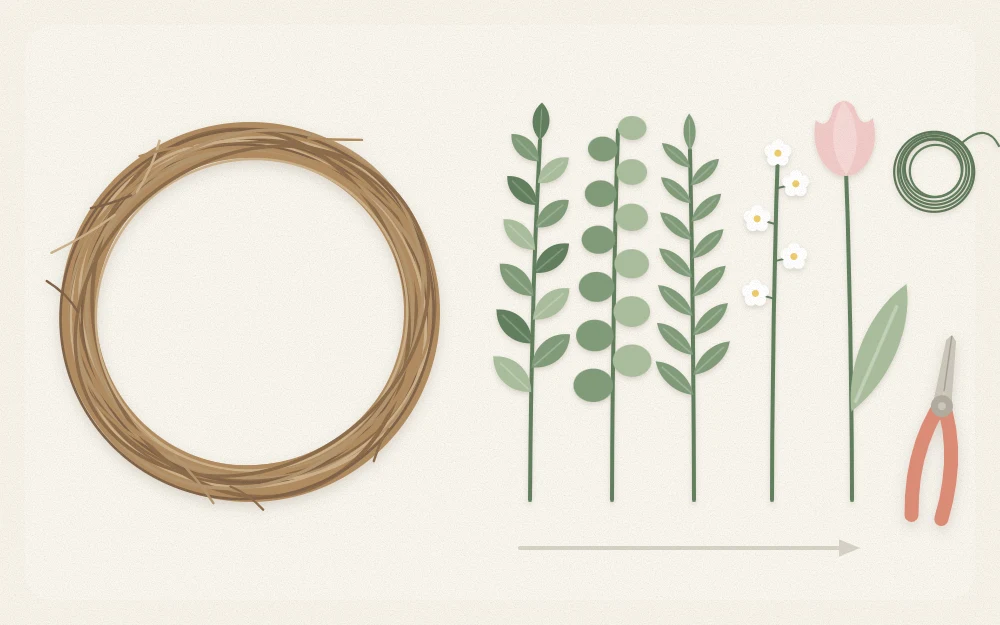
Before attaching anything, cut the long faux stems into shorter pieces of 6 to 10 in (15 to 25 cm) with wire cutters, then lay them beside the base in the order they will go on: greenery first, blossoms second, eggs and bow last.
All the stems in a crescent point outward from one central spot. Half of them sweep up the left side and half sweep along the bottom, so the two ends taper to thin tips while the middle is fullest.
Step by step: building the wreath
- Find the top. Hang the bare wreath or hold it upright and turn it until the shape pleases you. Mark the top with a scrap of ribbon.
- Tuck in the greenery. Starting at the center of the crescent, push the cut end of each greenery piece between the vines at a shallow angle. Work outward in both directions, overlapping each piece over the stem of the last.
- Wire as you go. Wrap floral wire around the base and over the stems every few inches, pulling it snug and hiding it under the leaves. Twist the ends together at the back and press them flat.
- Add the blossoms. Place the largest blossoms near the center and smaller sprigs toward the tips. Tuck them between the greenery and wire where needed.
- Place the eggs. Push the wire picks through the greenery into the vines, grouping the eggs in a loose cluster of three or five near the fullest point. A dot of hot glue at the base of each egg keeps it from turning.
- Tie the bow. Wire a simple bow at the center of the crescent, or at one tip if the middle already looks full. Trim the tails at an angle.
- Check from a distance. Hang the wreath, step back several feet, and fill any gaps with leftover leaf pieces.
Watch out
Hot glue guns and wire cutters are tools for adults. Rest the glue gun on a stand over a heatproof mat, and bend every cut wire end back toward the base so nothing sharp faces the door.
Keeping the wreath light
A heavy wreath pulls on its hanger and swings each time the door closes. A few choices keep the weight down:
- Use plastic or foam eggs rather than wooden or ceramic ones.
- Choose stems with fine wire cores and trim away thick plastic stalks.
- Leave at least half of the grapevine bare.
- Limit the design to three elements: greenery, one blossom type and eggs.
When a door has glass panels or a finish that scratches easily, a flat-backed spring door basket is a useful alternative to a twig base.
Adding a hanging loop
Cut about 12 in (30 cm) of ribbon or twine, pass it around the top of the base and through two or three vines, and knot it firmly at the back. A loop of floral wire twisted around the back vines works too, and stays hidden.
Hang the wreath from an over-the-door hanger or a removable adhesive hook rated for its weight; check the label on the hook. Under a covered porch faux stems hold up well, while a spot in strong sun or rain will fade ribbon and soften glued joins sooner.
Tip
Stick two small felt pads to the back of the wreath at the bottom. They stop the vines from tapping the door.
Storing the wreath flat
Untie the bow and store it separately, stuffed lightly with tissue so the loops keep their shape. Lay the wreath flat in a shallow box or a wreath storage bag, with crumpled tissue supporting the eggs and blossoms.
Keep the box in a dry, cool place with nothing stacked on top. Next spring, fluff the leaves, swap the ribbon or the eggs for a new color, and the wreath is ready to hang again.
Frequently asked questions
What size wreath fits a standard front door?
A base of about 14 in (36 cm) suits most single front doors once stems extend a little past the ring. A wide or double door can take 18 in (46 cm) or more. Leave a clear margin of door around the wreath so it does not look cramped.
Can I use fresh flowers on a grapevine wreath?
Fresh stems can be tucked into grapevine for a single day or an event, but they wilt quickly without water. For a wreath meant to last through the season, faux stems are the practical choice, and a few fresh sprigs can be added on the day and removed afterward.
How do I attach eggs to a wreath without glue?
Choose craft eggs sold on wire or wooden picks, or push a short length of floral wire into a foam egg. Slide the pick through the greenery and between the vines, then twist a second piece of wire around the pick and the base at the back to hold it.