DIY Easter Centerpiece: A Low Arrangement with Moss and Eggs
Build a long, low Easter centerpiece in a tray or shallow box: a liner, a bed of preserved moss, eggs in odd-numbered clusters and a few stems, kept low enough to see across. Includes a round-table version.
Tutorial at a glance
Materials
- Long shallow tray or wooden box
- Plastic or waxed paper liner
- Preserved moss
- 9 to 15 decorative craft eggs
- A few faux stems, or fresh stems with floral water tubes
A diy easter centerpiece does not need height to make an impression. A long, low tray of moss with eggs gathered in small groups and a few spring stems looks considered, leaves room for serving dishes, and lets everyone at the table see each other.
This arrangement is built in layers, from a liner at the bottom to the flowers at the top, and it takes less than an hour. Most of the pieces can be packed away and used again next spring.
Choose a tray or shallow box
Look for a container that is long, narrow and no more than about 3 in (8 cm) deep. A wooden tray, a shallow crate, a dough-bowl style trough or a plain wooden box all work. Depth matters more than style: a deep box swallows the moss and hides the eggs.
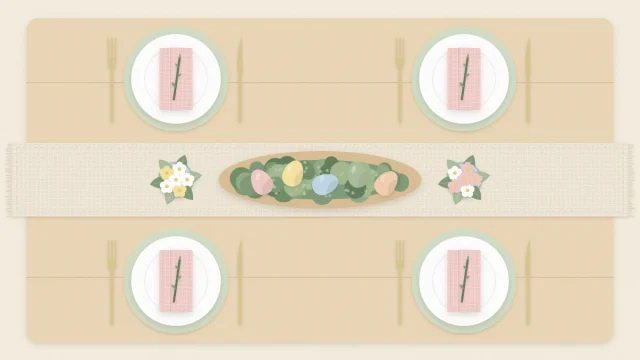
For length, aim for roughly one third of the table. On a 6 ft (1.8 m) table, a tray about 20 to 24 in (50 to 60 cm) long sits comfortably between the place settings. Keep the width under about 8 in (20 cm) so plates and glasses still fit on either side.
If you are planning the runner, plates and palette at the same time, the guide to planning an Easter table covers how the pieces fit together.
What you need
- A long shallow tray or wooden box
- A liner: a sheet of plastic, a cut-down trash bag or a piece of waxed paper
- Crumpled kraft paper or a little floral foam to raise the base, if the tray is deeper than the moss
- Preserved moss, enough to cover the tray in a layer about 1 in (2.5 cm) thick
- Nine to fifteen decorative eggs in two or three colors
- A few faux stems, or fresh stems with floral water tubes
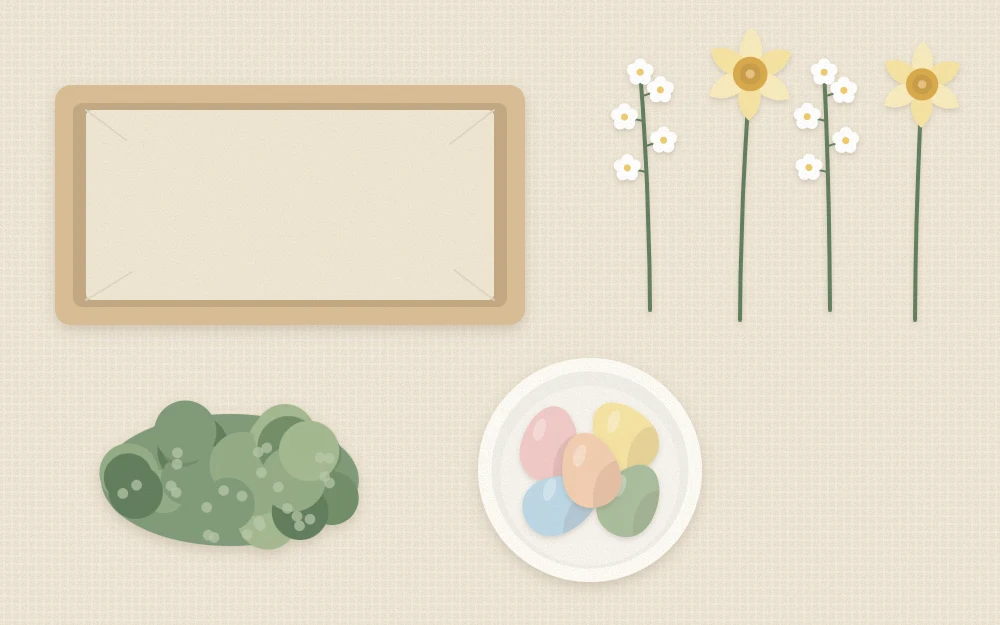
Use craft eggs in wood, paper mache, plastic or ceramic. They are stable, they can be reused, and they can sit on the table for the whole season. The eggs in this arrangement are decoration only.
Line the tray and lay the moss bed
Preserved moss sheds a little and sometimes carries dye, and fresh stems bring moisture. A liner protects both the tray and the tablecloth beneath it.
- Cut the liner slightly larger than the inside of the tray and press it into the corners. Trim it so nothing shows above the rim.
- If the tray is deep, add a layer of loosely crumpled paper so the moss will sit just below the rim.
- Pull the moss apart into hand-sized pieces and lay them over the base, overlapping the edges so no liner shows.
- Mound the moss gently in two or three places rather than leaving it flat. Small hills give the eggs somewhere to nestle.
- Let a few wisps trail over the rim at one or two points to soften the straight edge.
Tip
Mix two kinds of preserved moss if you can, such as flat sheet moss with a few clumps of rounded cushion moss. The change in texture makes the bed look gathered rather than manufactured.
Arrange the eggs in odd-numbered clusters
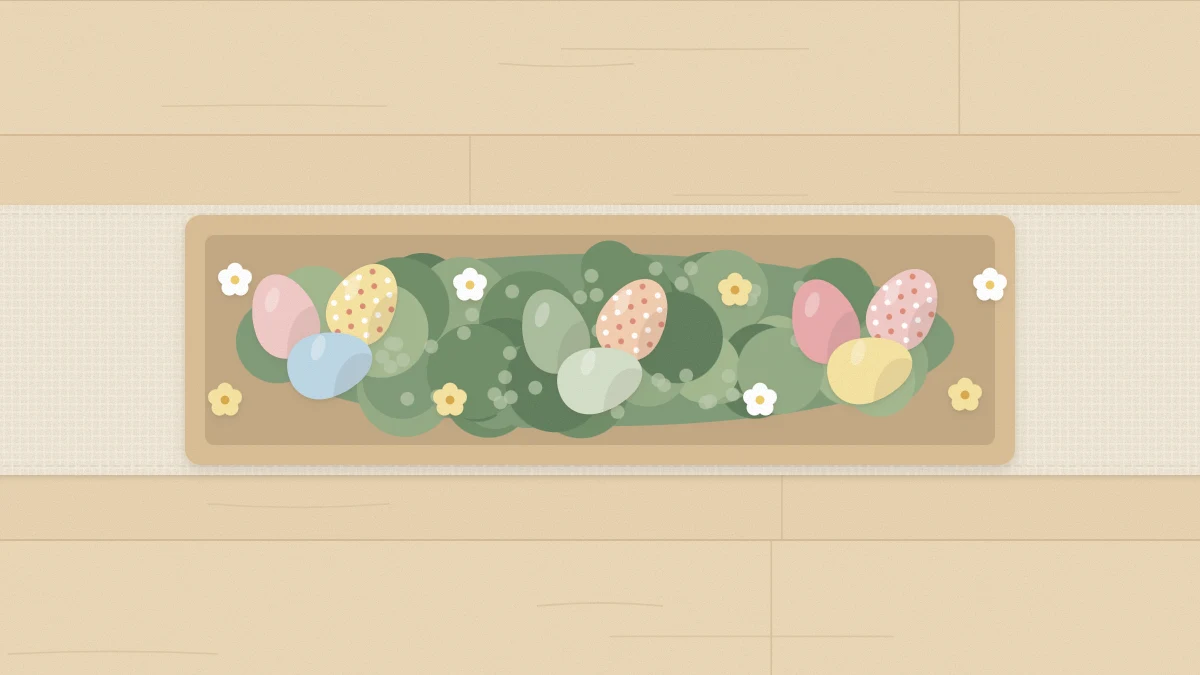
Eggs lined up at even intervals look stiff. Groups of three and five, with a single egg here and there, look as if they were found that way.
Start with the largest group slightly off center, then place a smaller group toward each end. Within each cluster, let the eggs touch and point in different directions, with one tipped on its side. Press each egg lightly into the moss so it sits in a hollow rather than on top.
Limit the colors to two or three, and let each cluster contain at least two of them. One speckled or patterned egg per group is enough of an accent.
Add stems with hidden water tubes
A handful of stems is all the arrangement needs. Faux stems are the simplest choice: cut them short with wire cutters, to about 4 to 6 in (10 to 15 cm), and push them into the moss at a low angle so they lean outward. The article on arranging faux spring flowers explains how to bend wired stems so they look natural.
Fresh flowers work too, with floral water tubes. Fill each tube, press the cap on, slide in one or two stems, and bury the tube in the moss at a slant. Small blooms suit the scale best: grape hyacinth, daffodils with short stems, waxflower or sprigs of flowering branches.
Place the stems in the gaps between egg clusters, leaning in two or three directions, and stop while you can still see plenty of moss.
Watch out
Moss, paper and dried stems should be kept away from flames. If you want candlelight near the centerpiece, use flameless LED candles.
Keep the height under eye level
A centerpiece that blocks the view across the table gets moved to the sideboard by the second course. Keep the tallest point under about 10 to 12 in (25 to 30 cm) above the tabletop, and most of the arrangement much lower than that.
Test it by sitting down in one of the chairs. If you can see the person opposite without leaning, the height is right. If a stem is in the way, trim it or angle it lower rather than removing it.
A version for a round table
A long tray looks awkward on a round table. Use a shallow round bowl, a low footed dish or a round wooden tray instead, about one third of the table’s diameter.
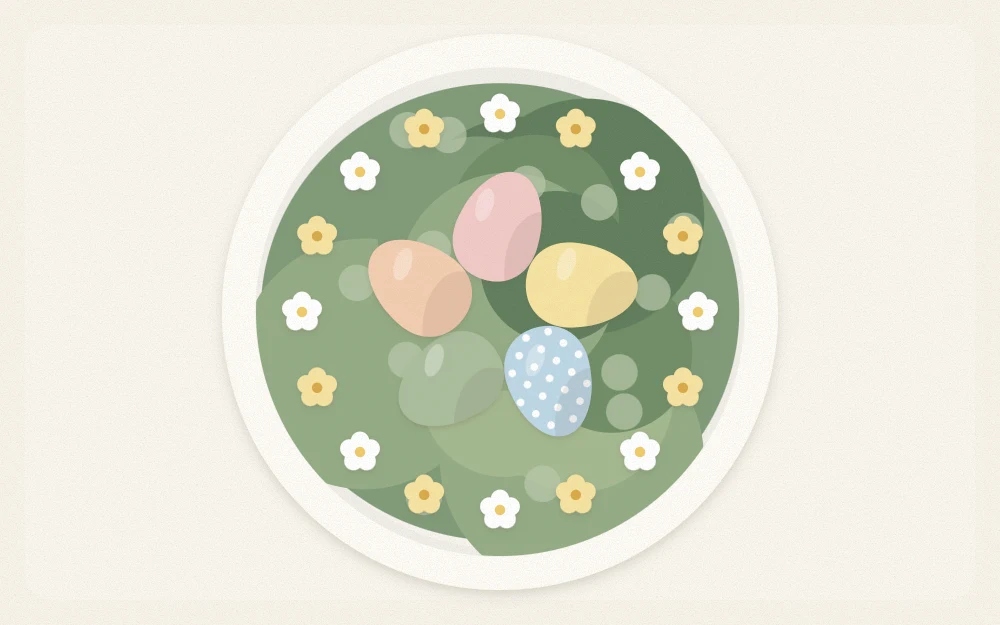
The layers are the same, but the layout changes. Build a single cluster of five eggs in the middle and ring it with short stems or small flower heads tucked into the moss near the rim. Because guests sit all the way around, turn the bowl as you work and check it from every side.
For a softer, taller shape with a handle, the same moss-and-egg approach works in a decorative Easter basket placed on a sideboard or hall table.
Keeping it fresh through the season
Preserved moss needs no water; keep it dry and out of direct sun so the color holds. Top up fresh-flower tubes every day or two and replace wilted stems as needed. When the season ends, lift out the eggs, shake the moss into a paper bag and store everything in the tray itself.
Frequently asked questions
How far ahead can I make an Easter centerpiece?
With preserved moss, craft eggs and faux stems, the arrangement can be made a week or more ahead and simply dusted before the meal. If you plan to use fresh flowers, build everything else in advance and add the filled water tubes and stems on the morning of the gathering.
How tall should a table centerpiece be?
Low enough that seated guests can see each other without leaning. As a rough guide, keep the highest stem under about 10 to 12 inches above the tabletop and the bulk of the arrangement well below that. Sit in a chair and check the sightline before the table is set.
What can I use instead of preserved moss?
Paper shred in a natural or green tone, raffia, dried grass or a bed of faux greenery all give a similar nest-like base. Faux moss sheets are another option and shed less. Whatever the material, keep the layer low and slightly uneven so the eggs can settle into it.