No-Sew Easter Table Runner from Fabric or Kraft Paper
Make a no-sew runner two ways: a frayed-edge linen or cotton strip sized to your table, and a kraft paper runner stamped with sponge-cut egg shapes. Includes a simple measuring formula.
Tutorial at a glance
Materials
- Woven linen or cotton fabric, or a roll of kraft paper
- Sharp fabric scissors and a long ruler
- Straight pin for pulling threads
- Flat sponge and acrylic craft paint
- Iron-on hem tape (optional)
An Easter table runner does more for a spring table than almost any other single piece. It draws a line down the center, gives the eggs, flowers and candles a place to sit, and lets the rest of the tabletop stay bare and calm.
Neither version here needs a sewing machine. The first is a strip of linen or cotton with soft frayed edges that will last for years. The second is a kraft paper runner stamped with egg shapes, made in an afternoon and recycled when the holiday is over.
How to Measure for a Runner
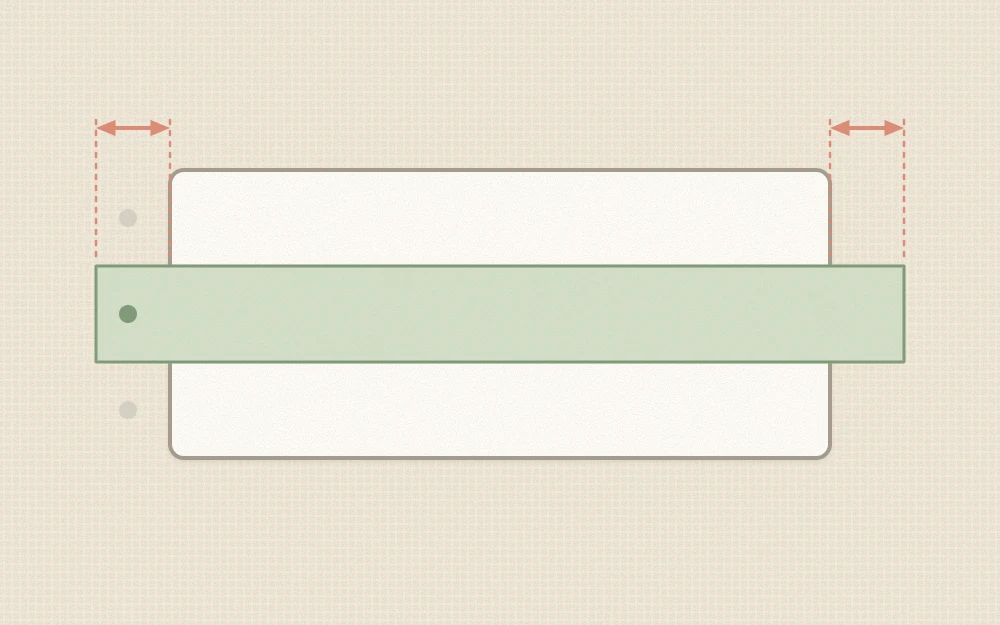
Two numbers decide whether a runner looks right: its width and how far it hangs over each end of the table.
- Width: about one third of the table width. A little narrower looks modern; much wider starts to read as a tablecloth.
- Drop: 6 to 12 inches (15 to 30 cm) hanging over each end. A short drop suits a casual table, a longer one feels more formal.
- Length: table length plus two drops.
As a worked example, take a table 72 inches (183 cm) long and 36 inches (91 cm) wide. One third of the width gives a runner 12 inches (30 cm) wide. With an 8 inch (20 cm) drop at each end, the finished length is 72 + 8 + 8 = 88 inches (224 cm).
Choosing Fabric That Frays Well
A frayed edge only works on a plain woven fabric, where the threads run straight up and down and side to side. Linen, linen-cotton blends, cotton homespun, osnaburg and burlap all fray into a neat fringe. Knits and felt will not fray at all.
Pick a medium weight in a quiet color: natural flax, cream, soft sage or a pale blush. If you want the cloth to echo the rest of the room, the wider plan in these Easter table decor ideas is a good place to settle on a scheme before you buy yardage.
Wash, dry and press the fabric before cutting, since woven cotton and linen shrink a little the first time.
Making the Frayed-Edge Fabric Runner
Add 1 inch (2.5 cm) to both the width and the length to allow for the fringe. For the example table, that means cutting a piece 13 by 89 inches (33 by 226 cm).
- Find the straight grain. Snip into the edge of the fabric and pull out a single thread across the full width. It leaves a faint line that follows the weave exactly.
- Cut along the pulled line. Repeat for all four sides. A runner cut on the grain frays evenly; one cut slightly off-grain frays into a wedge.
- Pull threads from each edge. Use a pin to lift one thread at a time and draw it out. Stop when the fringe is about half an inch (1.3 cm) deep on every side.
- Trim the fringe. Snip any long or tangled threads level with sharp scissors.
- Press. Iron the runner flat, using the heat setting on the fabric label.
Tip
To stop the fringe from creeping deeper over time, run a thin line of fabric glue along the last unpulled thread on the underside and let it dry fully before using the runner. Check the label for drying time.
The hem tape option
If you prefer a crisp edge, skip the fraying. Cut the fabric 2 inches (5 cm) larger in each direction, fold a 1 inch (2.5 cm) hem to the back on all sides, slip iron-on hem tape inside the fold and press according to the tape instructions. Hem the long sides first, then the short ends, so the corners sit flat.
Stamping a Kraft Paper Runner
Kraft paper on a roll is usually 18 to 36 inches (46 to 91 cm) wide, so most rolls need trimming. Cut the length first, then mark the width at several points, join the marks with a long ruler and cut along the line.
Cut the stamp
Draw an egg about 2.5 inches (6 cm) tall on a dry, flat kitchen sponge or a compressed craft sponge and cut it out with scissors. A fine-pored sponge gives a cleaner print. Cut a second, smaller egg if you want two sizes.
Print the pattern
- Cover the work surface and weight the paper corners so the runner lies flat.
- Pour a little acrylic craft paint into a shallow dish and spread it thin.
- Dampen the sponge, squeeze it out well, then press it into the paint and blot once on scrap paper.
- Stamp in rows, pressing straight down and lifting straight up. Reload the sponge every two or three prints for an even look, or less often for a faded effect.
- Leave the runner flat until the paint is dry to the touch, roughly 30 minutes to an hour depending on how thick it went on.
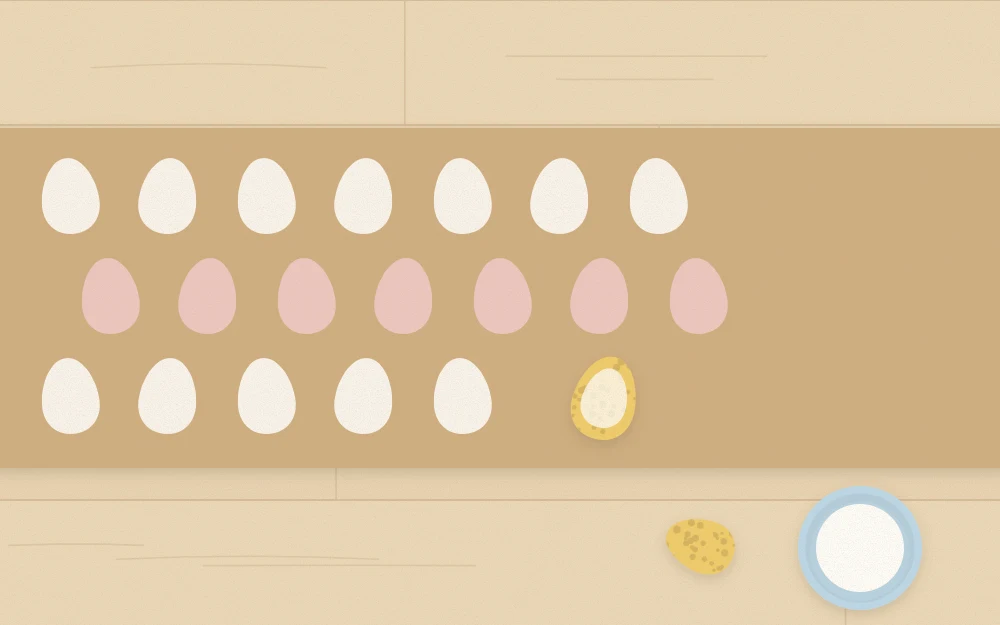
White paint on brown kraft is the most restrained choice; two pastels alternated in a brick pattern look livelier.
Styling the Runner on the Table
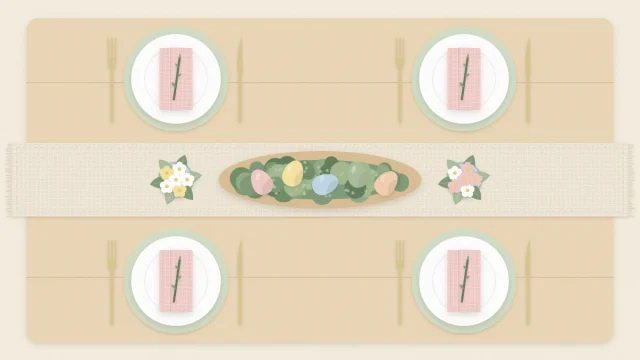
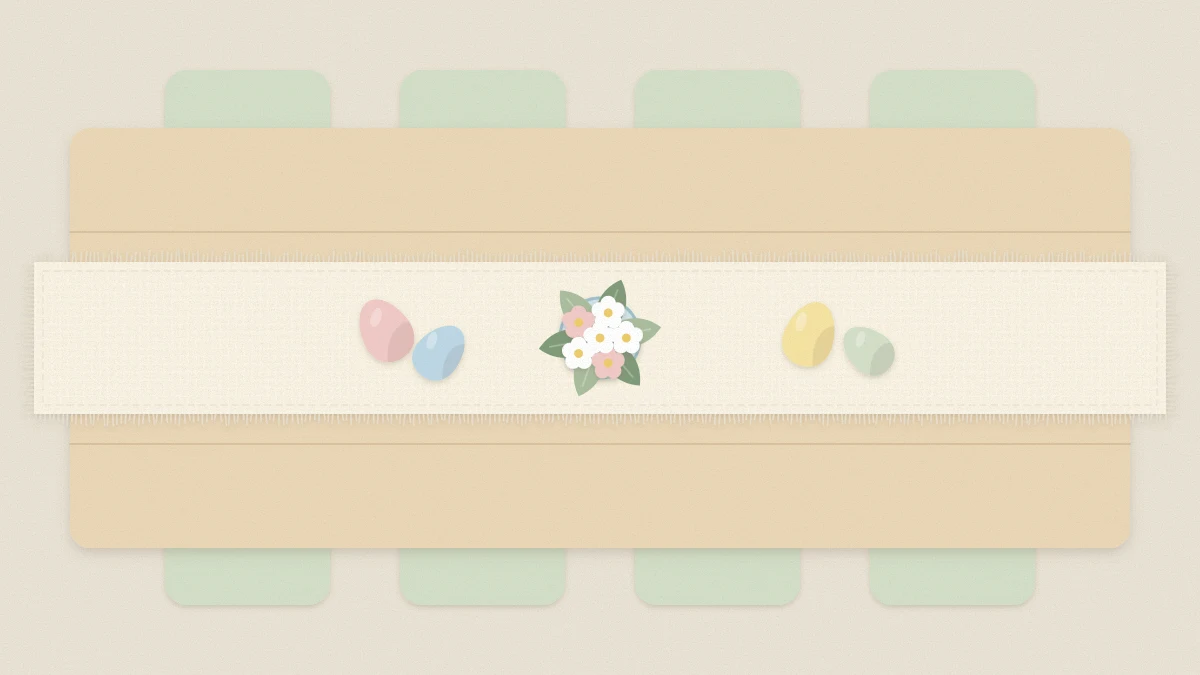
A runner is a base layer, so keep what sits on it low and loosely spaced: a few small jars of flowers, a scatter of decorated eggs, a pair of flameless LED candles. Paper runners in particular belong well away from open flames.
Let the plates overlap the runner edge slightly or sit just clear of it, but be consistent down the table. For the napkins, name cards and the rest of each seat, the guide to Easter place settings picks up where the runner leaves off.
The sponge stamp has a second use, too. Print the same egg on paper pennants and you have a matching DIY Easter banner to hang behind the table or across a sideboard.
Care and Storage
Shake crumbs off the fabric runner outdoors and spot-clean small marks. When it needs a full wash, use a gentle cycle inside a mesh laundry bag so the fringe does not tangle, then trim any stray threads and press. Roll it around a cardboard tube rather than folding it, which avoids a hard crease down the center next spring.
Frequently asked questions
How wide should a table runner be?
A good starting point is about one third of the table width. On a table 36 inches wide that gives a runner around 12 inches wide. Going slightly narrower leaves more room for place settings, while a wider strip suits a table that will hold a large centerpiece or serving dishes down the middle.
Which fabrics fray into a neat fringe?
Plain woven fabrics work best because their threads run in straight lines. Linen, linen-cotton blends, homespun cotton, osnaburg and burlap all pull into an even fringe. Knit fabrics and felt do not fray, and tightly woven quilting cotton frays slowly, so expect to spend longer pulling threads from it.
Can a kraft paper runner be used more than once?
It can if it stays dry and unmarked, but it is best thought of as a single-season piece. Roll it loosely around a tube instead of folding it, since creases in kraft paper do not press out. A used runner also makes good wrapping paper for small spring gifts.