Easter Craft Supplies: A Practical Starter Kit
A minimum kit for handmade Easter decor and the extras worth adding later: cardstock weights, felt types, craft egg forms, twine, wreath bases and cutting tools.
A short, well-chosen list of Easter craft supplies will carry you through garlands, eggs, wreaths and table decor without a drawer full of things used once. Most of it is ordinary: paper, felt, something to cut with and something to stick with.
This guide splits the list in two. The first part is the minimum kit, enough for most beginner projects. The second is the set of extras worth adding only when a specific project calls for them.
The minimum kit
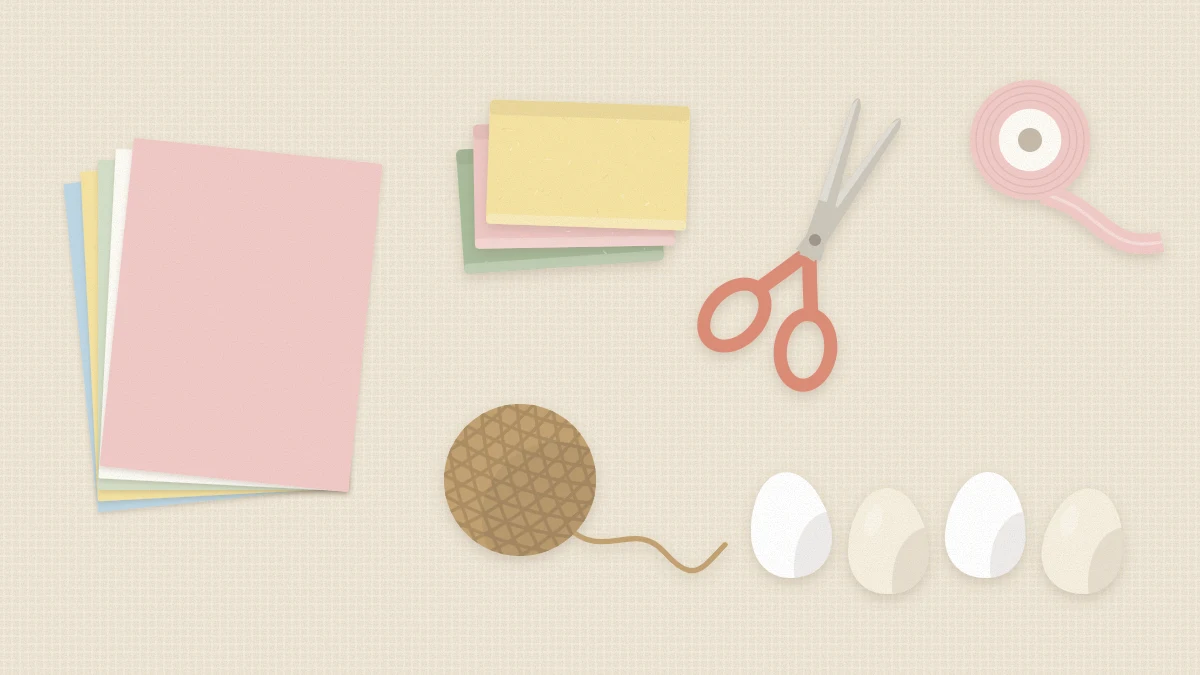
With these seven items you can make paper garlands, silhouettes, wrapped eggs and simple felt shapes.
- Cardstock in three or four spring colors plus white or cream.
- Sharp scissors kept for paper and fabric only.
- A glue stick for paper and a small bottle of tacky glue for everything else.
- Twine in a natural color, for hanging and wrapping.
- A pencil and a ruler for marking and measuring.
- A few craft egg forms in any material.
- Two or three felt sheets in colors that match the cardstock.
If you are not sure what to make first, the roundup of easy DIY Easter decorations lists six projects that use almost nothing beyond this kit.
Cardstock weights explained
Paper weight decides whether a shape hangs flat or curls. Ordinary printer paper is too thin for anything that hangs. For most decorations, 65 lb (176 gsm) card stock is the practical middle: stiff enough to hold a shape, thin enough to cut several layers at once and to fold cleanly.
Heavier sheets, around 80 to 110 lb (216 to 300 gsm), suit pieces that stand on their own, such as a silhouette leaned on a shelf or a place card. They are harder on the hands when you cut many shapes, so keep them for the few pieces that need the stiffness.
Choose solid-core sheets, colored all the way through, so cut edges and fold lines do not show a white line.
Felt: wool-blend or acrylic
Craft felt comes in two common types, and they behave differently.
| Type | How it handles | Best for |
|---|---|---|
| Acrylic felt | Thin, slightly glossy, can stretch and fuzz at cut edges | Large backing shapes, practice pieces, anything seen from a distance |
| Wool-blend felt | Denser and matte, cuts with a crisp edge, holds small shapes | Ornaments, small flowers and leaves, pieces handled or seen up close |
Acrylic felt is fine to begin with. If small pieces keep stretching out of shape as you cut them, moving to a wool blend usually solves it. Either way, buy a few sheets about 9 by 12 in (23 by 30 cm) rather than yardage; small projects use very little.
Craft egg forms
A reusable egg form removes the fragile part of egg decorating. The four common materials each have a strength.
- Paper mache: light, slightly textured, takes paint and glue readily. A good all-round choice for painting and for layering tissue.
- Wood: smooth and heavy, with a fine surface for detailed painting. It sits steadily in a bowl but is too heavy for thin branches.
- Plastic: very light and durable, ideal for hanging. Paint grips better after a light sanding or a coat of primer.
- Foam: the lightest option, and easy to push pins or wire into. The surface is soft, so it suits wrapping in twine, yarn or fabric more than painting.
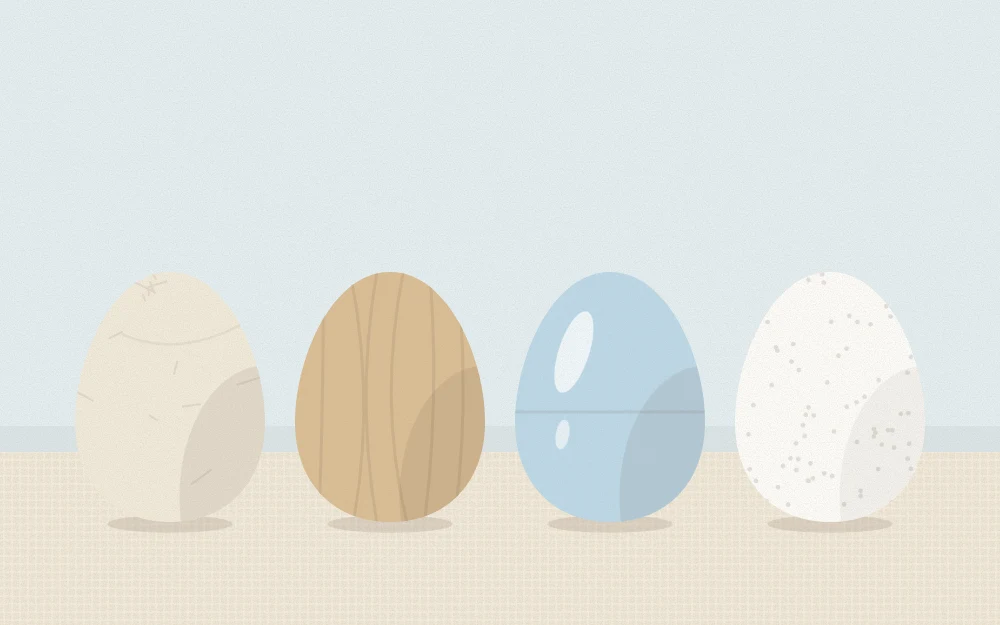
Six eggs in one medium size, around 2.5 in (6 cm) tall, are enough to start. Add other sizes later if you want variety in a bowl.
Twine, ribbon and wreath bases
Natural jute or cotton twine does most of the work: stringing garlands, wrapping eggs, tying jars. Add one spool of ribbon about 0.5 in (1.3 cm) wide in a color from your palette for bows and hanging loops. Clear thread or fine white cotton is useful for hanging light eggs so the hanger almost disappears.
Wreath bases
You only need a base when you decide to make a wreath, but it helps to know the options. Grapevine bases look finished with very little added. Foam wreath forms are smooth and need to be wrapped or fully covered. Embroidery hoops and plain metal rings make light, open wreaths. A base about 12 in (30 cm) across fits most interior doors and walls.
Cutting tools
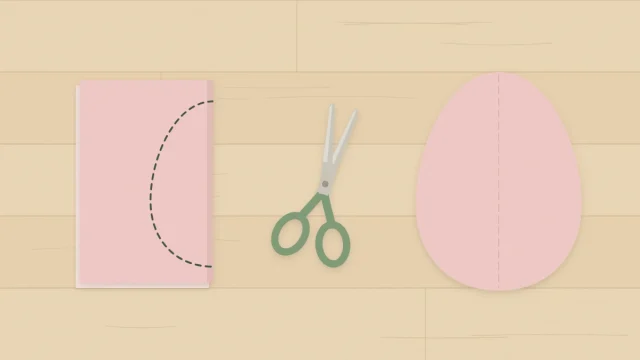
One pair of sharp, medium scissors handles nearly everything. Small detail scissors help with tight curves such as bunny ears and petals. A craft knife with a cutting mat gives cleaner interior cuts on heavy cardstock, and it is a tool for adults only. Whichever you use, technique matters more than the tool; the guide on cutting symmetrical egg and bunny shapes shows the fold-and-cut method that makes both sides match.
Tip
Keep one pair of scissors for paper and felt only. Cutting tape, wire or floral stems dulls the blades quickly, and dull blades chew felt instead of slicing it.
Extras worth adding later
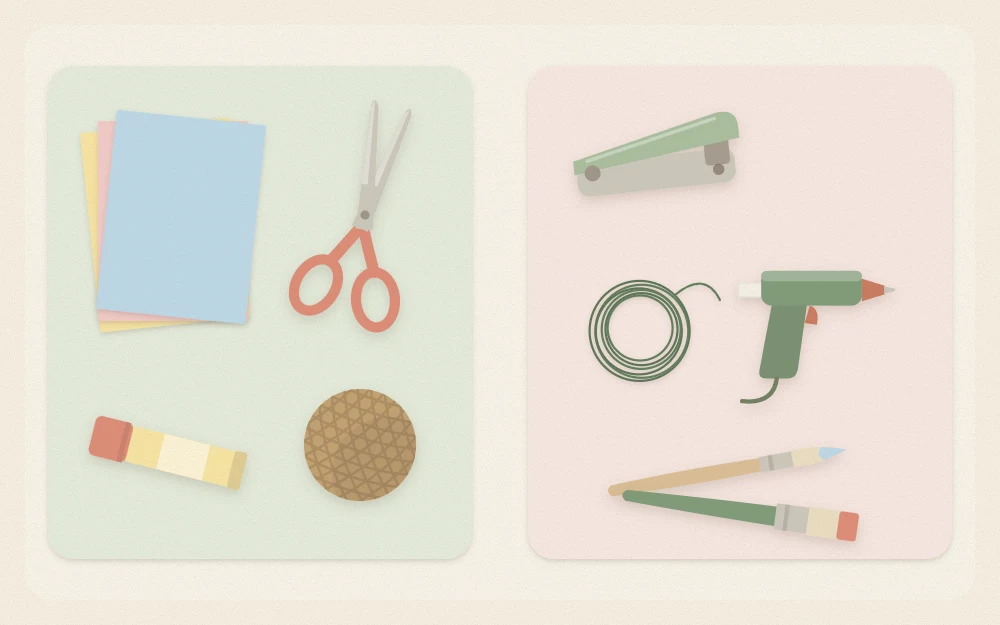
- Hole punch: faster and neater than a needle for garlands.
- Hot glue gun: for wreaths and bulky items. It is an adult tool; keep it away from children.
- Floral wire and tape: for attaching stems and faux flowers.
- Acrylic craft paint and two brushes: one flat, one fine.
- Decoupage medium: for tissue and napkin layers on eggs.
- Double-sided tape: for clean, dry paper joins.
Adhesives deserve their own decision, because the wrong one wrinkles paper or soaks through felt. The guide to choosing glue for Easter crafts matches each type to its material.
What to buy once and reuse
Tools, egg forms, wreath bases and hoops last for years, so they are the place to choose well. Paper, felt, ribbon and glue are used up, so buy them in small amounts and in the colors of this year’s scheme. Store the reusable pieces together in one box, and next spring only the consumables need replacing.
Frequently asked questions
What weight of cardstock is best for Easter decorations?
For garlands and most hanging shapes, 65 lb (176 gsm) cardstock is a reliable choice because it stays flat but still cuts easily. Use heavier sheets, roughly 80 to 110 lb, only for pieces that must stand upright by themselves, such as silhouettes and place cards.
Which craft egg form should a beginner choose?
Paper mache eggs are the most versatile starting point. They are light enough to hang, accept paint and glue without preparation, and survive being dropped. Choose wood for detailed painting and a heavier feel, plastic for hanging on thin branches, and foam for wrapping or pinning.
Do I need a hot glue gun for Easter crafts?
Not for paper and felt projects, where a glue stick and tacky glue do the job. A glue gun becomes useful for wreaths and bulky pieces that need an instant hold. It gets very hot, so it is a tool for adults and should be kept away from children.