Which Glue to Use for Easter Crafts: Paper, Felt, Wood and Eggshell
Match the adhesive to the material: which glue suits paper, felt, wood, eggshell and wreaths, with a comparison table and notes on drying and hot glue.
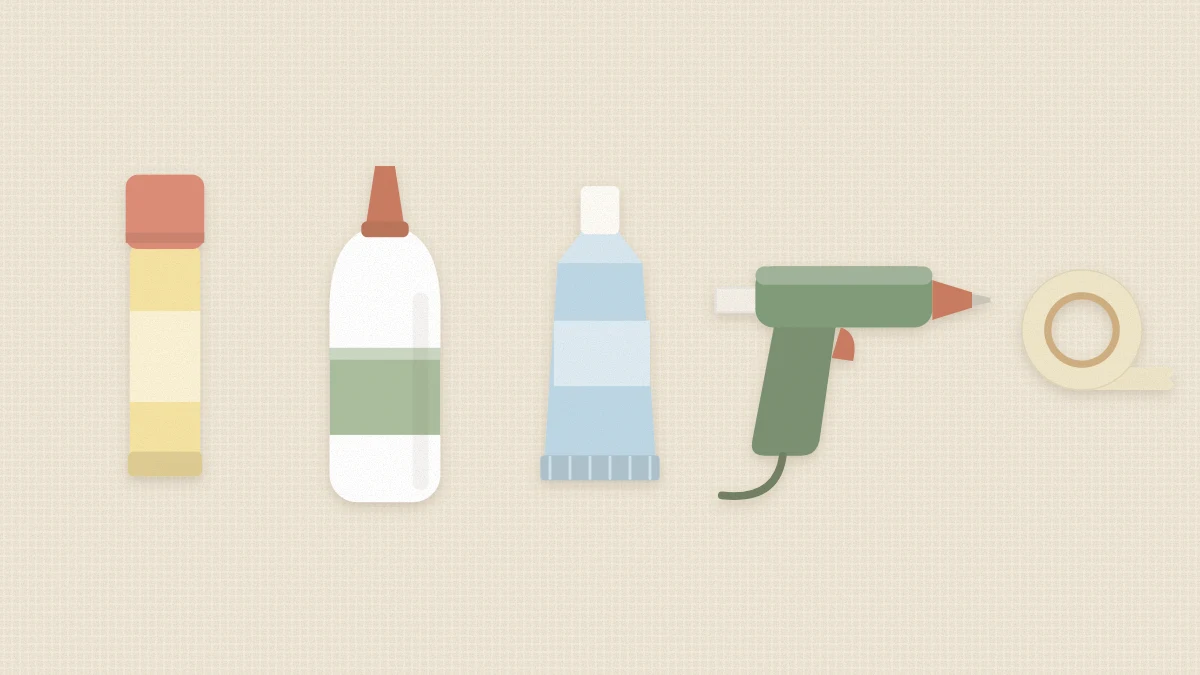
There is no single best glue for Easter crafts, because paper, felt, wood and eggshell each react differently to moisture and weight. The adhesive that holds a wreath together will wrinkle a paper egg, and the glue stick that suits cardstock will let a felt flower fall off within a day.
The answer is to match the adhesive to the material. Six common types cover almost every spring decorating project, and most households already own two or three of them.
Quick comparison
| Adhesive | Best for | Approximate setting time | Main drawback |
|---|---|---|---|
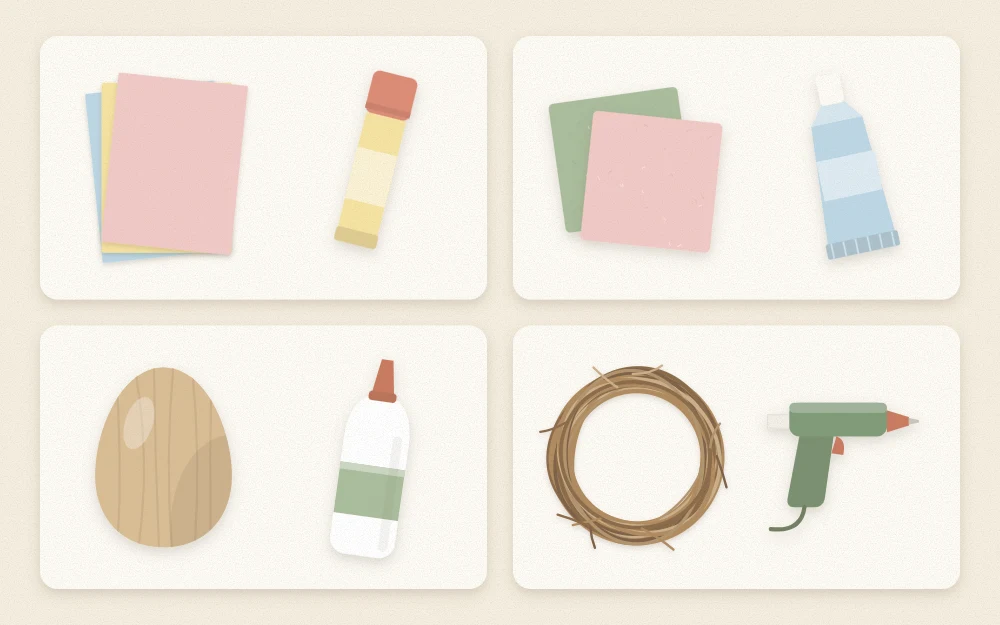
| Glue stick | Paper to paper, light cardstock | A minute or two | Weak on heavy or textured pieces |
| White craft glue | Cardstock, paper mache, wood | About 30 to 60 minutes | Wet; can wrinkle thin paper |
| Tacky glue | Felt, ribbon, twine, trims | About 30 minutes to grip | Soaks through thin felt if overused |
| Hot glue | Wreaths, branches, bulky items | Under a minute | Strings; burns; visible blobs |
| Decoupage medium | Tissue and napkin layers on eggs | About 15 to 20 minutes per coat | Needs several thin coats |
| Double-sided tape | Clean, flat paper joins | Instant | No repositioning |
All times are approximate and vary with the product, the room and how thickly the glue is applied. Check the label for full cure times.
Paper and cardstock
Paper swells when it gets wet, so the driest adhesive that will hold is the right one. A glue stick is the first choice for layering paper on paper: it adds almost no moisture and allows a few seconds of adjustment. Apply it right to the edges, and press the join under a heavy book for a few minutes so the corners stay down.
White craft glue is stronger and better for heavy cardstock, folded tabs and three-dimensional shapes. Use very little. Spread a thin film with a scrap of card or a brush rather than squeezing a bead straight from the bottle, since a thick line is what causes ripples.
Double-sided tape gives the cleanest result on flat joins such as a band around a napkin ring, a layered tag or the seam of a paper cone. It holds at once, with no moisture and no drying. The hold is immediate, though, so line the pieces up before they touch.
Felt and fabric
Felt is thick and fibrous, and a glue stick only grips the surface fuzz. Tacky glue, a thicker version of white craft glue, grabs quickly and stays slightly flexible when dry, which suits soft materials.
- Apply small dots or a thin line, keeping it a little way in from the edge.
- Press the pieces together and hold for about 30 seconds.
- Leave them flat until the glue has set, roughly 30 minutes, and longer before hanging.
Too much glue soaks through thin felt and dries as a hard, shiny patch on the front. If a piece will be handled a lot or stuffed, stitching is the better join; the tutorial for felt Easter egg ornaments shows where glue is enough and where a few stitches hold better.
Wood and paper mache
Wooden eggs, beads and small plaques bond well with white craft glue or tacky glue, since wood is porous and absorbs a little of the adhesive. Hold or tape the pieces in place while the glue grips, because round shapes tend to slide.
For ribbon or twine wrapped around a wooden or paper mache egg, tacky glue is the neater choice. A dot at the start, a thin line every few turns and a dot at the end are enough.
Eggshell and tissue layers
Blown eggshells and craft egg forms covered in tissue or napkin paper call for decoupage medium. It works as glue and sealer in one: brush a thin coat onto the egg, lay the paper on, then brush another thin coat over the top from the center outward to smooth out wrinkles.
Thin coats matter more than anything else. A thick coat stays cloudy and tacky, while two or three thin ones dry clear. Allow about 15 to 20 minutes between coats, or whatever the label advises. The full method is in the guide to decoupage Easter eggs.
To attach a ribbon loop or a small trim to a shell, use a dot of tacky glue. Hot glue is heavy on something so fragile and can pull away from a smooth surface.
Wreaths and bulky items
Hot glue earns its place when pieces are heavy, awkward or need to hold at once: faux flowers on a grapevine base, moss on a wreath form, eggs fixed into a nest. It sets in well under a minute, so there is no holding and waiting.
Dealing with strings
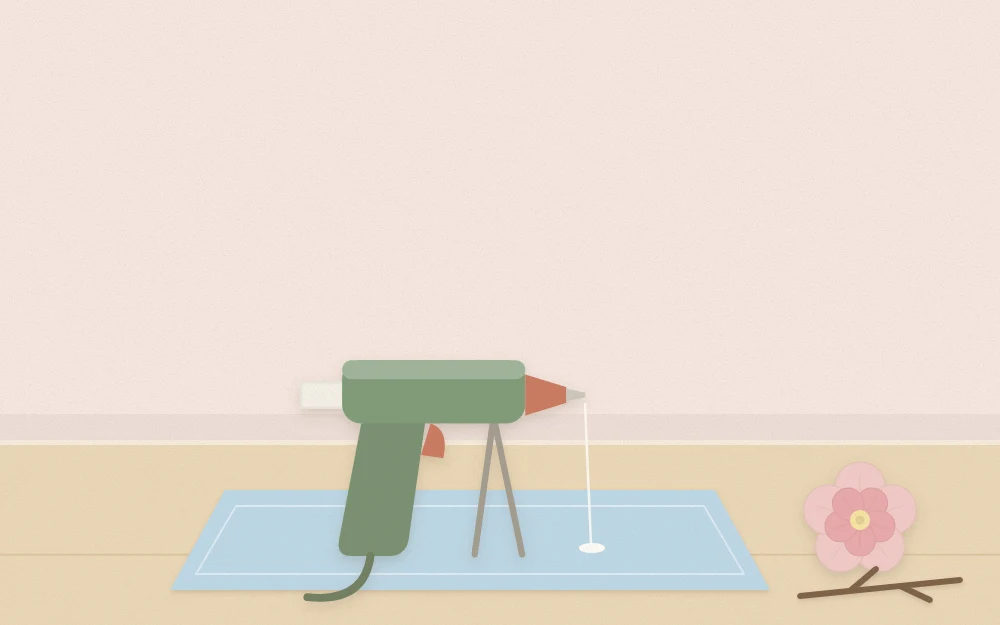
The fine threads that trail from the nozzle are the main nuisance of hot glue. To reduce them, press the nozzle against the work and swirl it in a small circle as you pull away, rather than lifting straight up. Whatever strings remain can be picked off by hand once cool, or cleared with a few seconds of warm air from a hair dryer.
Working with a glue gun
A glue gun is an adult tool. The nozzle and the melted glue are hot enough to burn skin, and the glue stays hot for several seconds after it leaves the gun.
- Rest the gun on its stand over a silicone mat or a scrap of cardboard to catch drips.
- Press pieces into place with a craft stick, not a fingertip.
- Keep the gun and its cord out of the reach of children, and unplug it when you step away.
- A low-temperature gun is gentler on foam, ribbon and thin fabric.
Watch out
High-temperature hot glue can melt foam wreath forms and plastic eggs. Test a small dot on a hidden spot first, or switch to a low-temperature gun or tacky glue.
Building a small adhesive kit
Three adhesives handle most projects: a glue stick, a bottle of tacky glue and a roll of double-sided tape. Add decoupage medium when you plan to cover eggs, and a glue gun when you move on to wreaths. The wider Easter craft supplies list shows where adhesives sit among the other basics.
Frequently asked questions
What glue holds felt without showing through?
Tacky glue, used sparingly. Put small dots or a thin line slightly inside the edge, press for about half a minute and let the piece dry flat. Shiny patches on the front mean too much glue was used, so reduce the amount rather than changing the product.
Why does my paper wrinkle when I glue it?
The glue is too wet or too thick for the paper. Switch to a glue stick or double-sided tape for thin sheets. If you need white craft glue for strength, spread a very thin film with a brush or a scrap of card and press the join under a book while it dries.
Can hot glue be used on plastic or foam eggs?
Sometimes, with care. High-temperature glue can soften or melt both materials, so test a small dot where it will not show. A low-temperature glue gun is the gentler option, and tacky glue is a reliable alternative when you can wait for it to dry.