Spring Faux Flower Arrangements in Jars and Pitchers
Arrange faux tulips, daffodils, ranunculus and branches so they look natural: pick the vessel, tape a grid, add greenery first, place focal flowers in odd numbers, then bend and trim the stems.
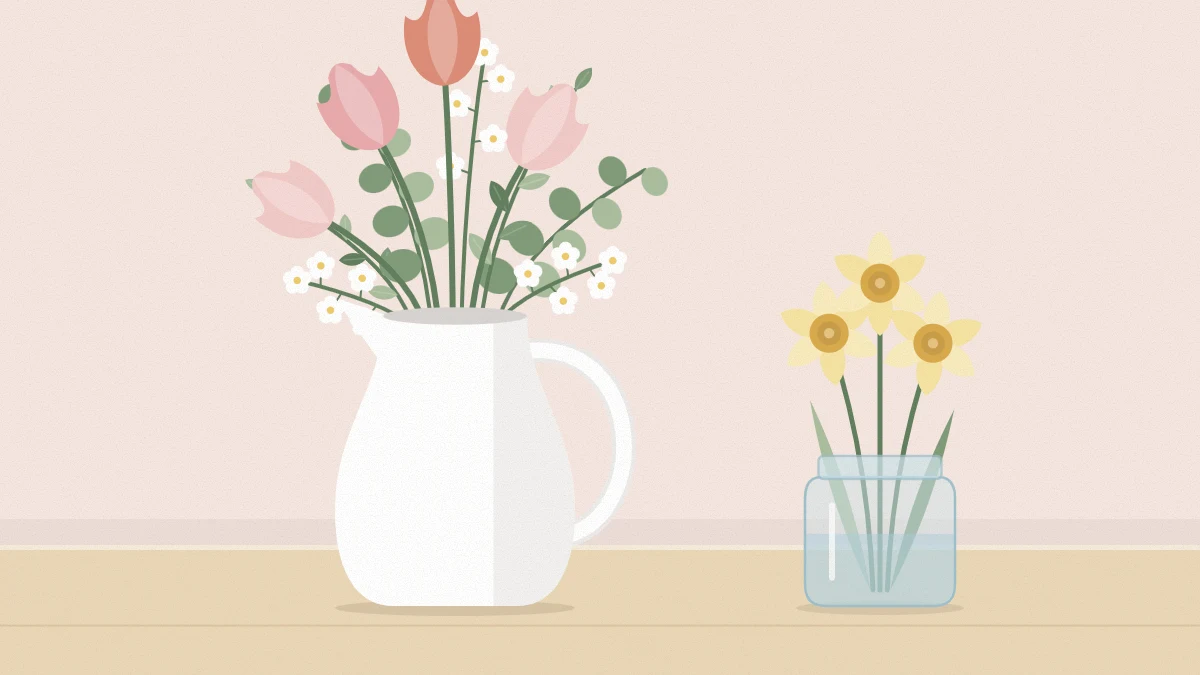
Faux stems have improved a great deal, but spring flower arrangements made with them still give themselves away when the stems stand straight, evenly spaced and all at one height. The flowers are rarely the problem. The arranging is.
What follows is a way of building an arrangement in a jar or pitcher so that it reads as a loose bunch brought in from a garden: a suitable vessel, a hidden grid, greenery first, and flowers that have been bent and trimmed until no two sit alike.
Choose stems that look believable
Tulips, daffodils, ranunculus and blossom branches are the natural choices for spring. When you are selecting them, look past the color to the details.
- Wired stems. A stem you can bend is worth more than a perfect petal. Rigid plastic stems only ever point one way.
- Varied bloom stages. A mix of tight buds, half-open and fully open flowers looks far more natural than a set of identical blooms.
- Matte petals and leaves. Shine reads as plastic. Slightly uneven color is a good sign.
- Restrained color. Two flower colors plus green and white are usually enough.
If you are unsure which colors to combine, the Easter color palettes guide sets out several spring combinations that also work for flowers.
Match the vessel to the stems
The vessel sets the scale of everything else, so decide on it before trimming anything.
| Vessel | Suits | Note |
|---|---|---|
| Ceramic pitcher | Tulips, blossom branches, mixed bunches | Opaque sides hide stems and wire |
| Wide-mouth glass jar | Daffodils, ranunculus, short bunches | Stems show, so keep them tidy |
| Narrow bottle | One to three single stems | Needs no grid |
| Tall cylinder vase | Long branches | Weight the base with pebbles |
In clear glass, bare wire and plastic stem ends are visible. You can line the inside with a large leaf wrapped around the stems, fill the lower part with pebbles or moss, or simply choose an opaque pitcher. Adding water to a glass jar makes faux stems look more convincing, but check first that the stems are plastic-coated all the way down; exposed wire may rust and paper-wrapped stems will soften.
Make a tape grid across the opening
A wide opening lets every stem slump to the rim, leaving a hole in the middle. A grid of tape solves this by giving each stem its own compartment.
- Dry the rim of the vessel so the tape will stick.
- Stretch three or four strips of narrow clear tape across the opening in one direction, evenly spaced.
- Add the same number of strips at right angles, forming squares about 0.75 in (2 cm) across.
- Run one strip of tape around the outside of the rim to hold down the ends.
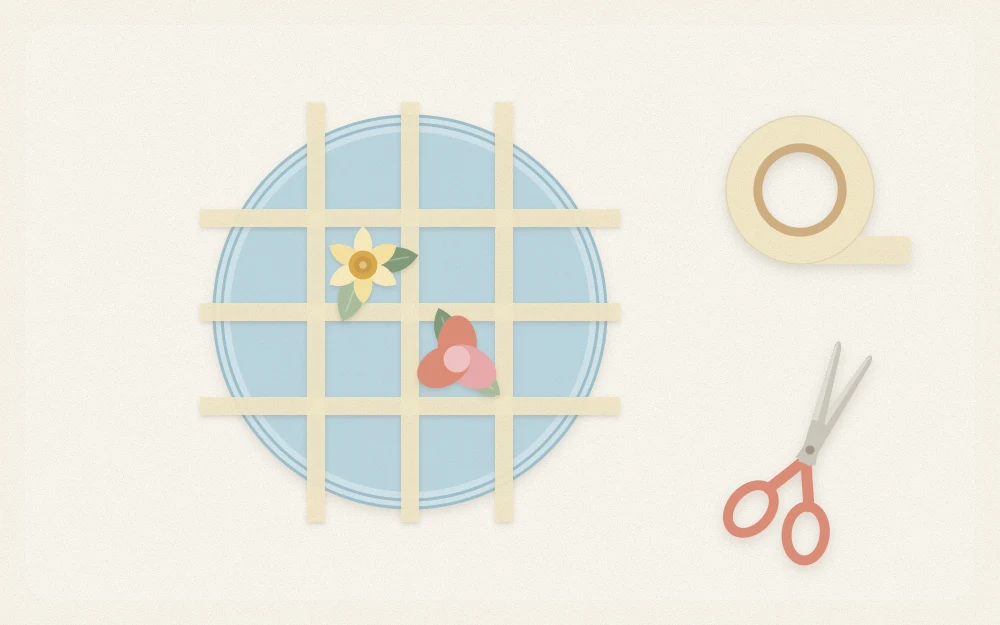
The grid disappears under the leaves once the vessel is full. For a pitcher with a narrow neck you can skip it, and a ball of crumpled chicken wire inside an opaque vessel does the same job.
Get the proportions right
As a working rule, the tallest stems should stand about one and a half to two times the height of the vessel, measured from the table. For a pitcher 8 in (20 cm) tall, that puts the top of the arrangement at roughly 12 to 16 in (30 to 40 cm). Shorter than that and the bunch looks cramped; much taller and it looks ready to tip.
The width matters too. A relaxed arrangement is usually about as wide as it is tall above the rim, with a few stems reaching beyond the outline.
Bend and trim the stems
Hold each stem against the outside of the vessel to judge its length before cutting. Trim with wire cutters, not scissors, since the wire core will damage scissor blades. Cut a little long at first; a stem can be shortened again, but not lengthened. If you would prefer not to cut a long stem, fold the lower part back on itself inside an opaque vessel.
Then give every stem a shape. Curve tulip stems gently so the heads lean outward, tilt a daffodil head slightly down, and bend a ranunculus stem just below the bloom. Open out leaves that have been flattened in the pack. Straight stems are the clearest sign of a faux arrangement.
Build in three layers
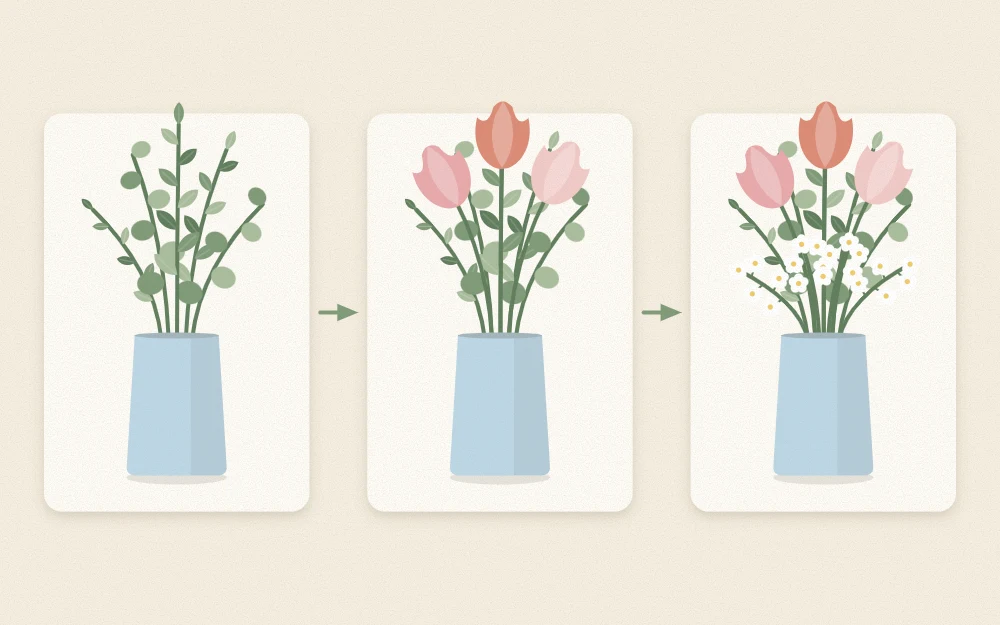
- Greenery first. Place leafy stems around the rim so they lean outward, then one or two taller pieces toward the back. This sets the outline and hides the grid.
- Focal flowers in odd numbers. Add three or five of the largest blooms at different heights, forming a loose triangle. Turn some heads to the side and place one low, near the rim.
- Filler last. Tuck small blossoms, buds and fine sprigs into the gaps, letting a few extend beyond the main outline.
Tip
Turn the vessel a quarter turn after every few stems. An arrangement built from one side only tends to be flat at the back and heavy at the front.
Leave some air. If you cannot see any space between the blooms, take one out.
Where arrangements work best
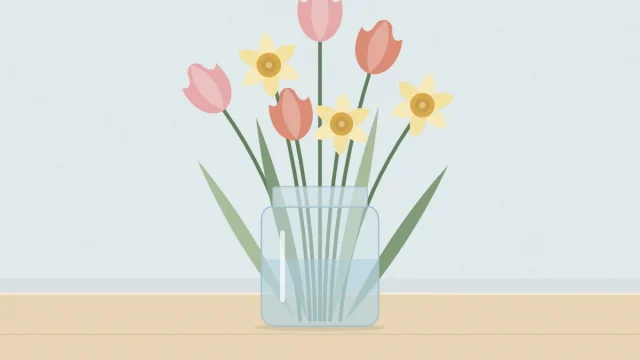
A tall pitcher suits a console, a mantel end or a kitchen counter. A short jar of daffodils suits a windowsill or a bedside table. On a dining table, tall arrangements block the view across, so use them on a sideboard and build something low for the middle, such as this DIY Easter centerpiece with moss and eggs.
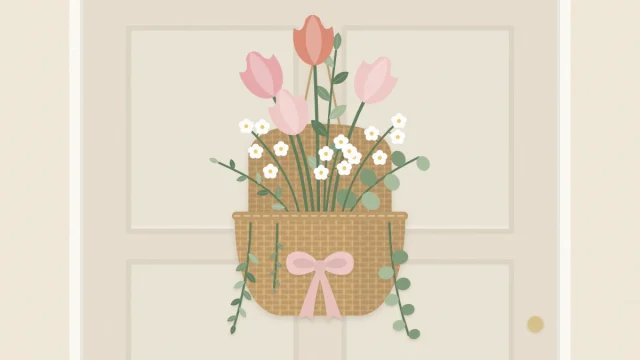
The same layering, with tall stems at the back and trailing greenery at the front, is what fills a spring door basket if you would like the flowers at the entrance too.
Keeping faux stems fresh
Dust dulls faux flowers quickly. Use a soft, dry paintbrush or a hair dryer on its cool setting every week or two. Keep arrangements out of strong direct sun, which fades petals over time. At the end of the season, remove the tape, straighten the stems loosely and store them lying flat in a long box so the heads are not crushed.
Frequently asked questions
How many stems does one arrangement need?
For a medium pitcher, plan on roughly four to six greenery stems, three or five focal flowers and four to six filler stems. A wide-mouth jar needs fewer, and a narrow bottle only one to three. It is easier to begin with too few and add than to thin out a crowded vessel.
Can faux and fresh stems be mixed?
Yes, and a few fresh branches or leaves make faux flowers more convincing. Put water in the vessel only if every faux stem is plastic-coated to the base, because exposed wire may rust and paper wrapping softens. Otherwise stand the fresh stems in a small hidden jar of water inside the larger vessel.
How long should the stems be cut?
Aim for the tallest stems to stand about one and a half to two times the height of the vessel, with the others stepping down from there. Hold each stem against the outside of the vessel before cutting, and trim a little at a time with wire cutters.